Not every couple wants to write their own vows, and there's nothing lesser about that choice. Standard and religious wedding vows have been said, in close to their current form, for centuries, by millions of couples before you. That weight is exactly the point for a lot of people, an assurance that what you're promising has meaning far beyond your own wedding day. Here's the wording itself, across the traditions couples ask about most, along with where each version comes from and how to adapt it if you want the familiar shape with a smaller personal touch.
The classic secular vow
This is the version most people picture when they imagine "traditional wedding vows," even outside a religious ceremony:
"I, [name], take you, [name], to be my [husband/wife/spouse], to have and to hold, from this day forward, for better, for worse, for richer, for poorer, in sickness and in health, to love and to cherish, until death do us part."
The wording traces back to the 1662 Book of Common Prayer and has barely changed since. The older Anglican version included "to love, cherish, and obey" for the bride specifically; almost every modern ceremony has dropped "obey" entirely, and many couples now say "as long as we both shall live" instead of "until death do us part," which reads slightly less stark without losing the sentiment. Both are fully standard substitutions, not modern reinventions, so use whichever version feels right without worrying you're breaking with tradition.
Christian and Catholic vows
The Catholic Rite of Marriage uses this wording during the ceremony itself:
"I, [name], take you, [name], to be my [wife/husband]. I promise to be true to you in good times and in bad, in sickness and in health. I will love you and honour you all the days of my life."
Before this exchange, the priest typically asks each partner to confirm their intent, a version of: "Are you prepared, as you follow the path of marriage, to love and honour each other for as long as you both shall live?" Protestant and other Christian denominations generally use close variants of the classic secular wording above, often with added biblical framing from the officiant either before or after the vows themselves.
Biblical wedding vows and scripture
Couples looking for "biblical wedding vows" are often really looking for scripture to include alongside standard vows, either read by the officiant, a family member, or woven into personal vows. The passages that come up most often at Christian weddings:
- 1 Corinthians 13:4–7 — "Love is patient, love is kind. It does not envy, it does not boast, it is not proud... It always protects, always trusts, always hopes, always perseveres."
- Ruth 1:16–17 — "Where you go I will go, and where you stay I will stay. Your people will be my people and your God my God."
- Ecclesiastes 4:9–12 — on two being better than one, and a cord of three strands not being quickly broken.
- Genesis 2:24 — "Therefore a man shall leave his father and mother and be united to his wife, and they shall become one flesh."
- Colossians 3:14 — "And over all these virtues put on love, which binds them all together in perfect unity."
These work well read aloud by your officiant or a chosen family member as a standalone reading, or quoted in part within your own personal vows if you want scriptural language without reciting a full passage.
Jewish wedding vows and ceremony elements
A traditional Jewish wedding doesn't centre on spoken personal vows the way a Western Christian ceremony does. The legal and ceremonial weight sits instead in the ketubah, the written marriage contract, and the Sheva Brachot, the seven blessings recited over the couple, traditionally in Hebrew, often by different family members or friends chosen to honour them. Many modern Jewish and interfaith ceremonies now add a short spoken exchange between the couple alongside these traditional elements, giving both the ritual weight of the ketubah and Sheva Brachot and a personal spoken moment.
Hindu and Islamic wedding vows
A Hindu wedding ceremony's central commitment happens through the Saptapadi, seven steps taken together around the sacred fire, each step representing a specific vow: for food and nourishment, for strength, for prosperity, for wisdom and happiness, for progeny, for health and long life, and for friendship and lifelong companionship. The couple recites the meaning of each step as they take it, rather than a single spoken vow.
An Islamic Nikah centres on the marriage contract (the Nikahnama), agreed consent from both parties stated clearly in front of witnesses, and the Mahr, a mandatory gift from the groom to the bride agreed as part of the contract. There isn't a single standardised spoken vow text across all Islamic ceremonies, since practice varies by school of thought and region, but the consent itself, spoken clearly and witnessed, is the core requirement everywhere.
Adapting traditional vows without losing what makes them work
If you like the weight of traditional wording but want it to feel slightly more like you, the safest edits are small ones: swap in a first name where the template says "husband" or "wife," adjust "obey" or "death do us part" as covered above, or add a single personal sentence immediately after the traditional vow rather than rewriting it. What doesn't tend to work is rewriting the traditional structure heavily while keeping a few of its famous phrases, "to have and to hold" dropped into an otherwise completely personal vow can read as an odd, mismatched quote rather than a deliberate choice. Either commit to the traditional wording largely as-is, or write fully personal vows using our step-by-step vow-writing guide. The middle ground works best as a short addition, not a patchwork rewrite.
Secular and civil ceremony vows
Couples having a fully secular or civil ceremony, with no religious content at all, most often use the classic secular version at the top of this guide, sometimes with small wording changes to remove any residual religious phrasing a couple wants to avoid entirely. There's no separate "official" secular vow text the way there's a Catholic Rite of Marriage or a Hindu Saptapadi, since a civil ceremony's actual legal requirement is the marriage officer's declaration, not any particular vow wording. That gives secular couples real freedom to use the classic version, adapt it, write personal vows, or skip spoken vows beyond the legal minimum entirely and rely on rings and readings to carry the ceremonial weight instead.
South African cultural and traditional wedding vows
If you're looking specifically for Zulu, Xhosa, Tswana, Venda, or other South African traditional wedding customs, the commitment is usually expressed through the ceremony itself, lobola negotiations, specific rituals, and family blessings, rather than a single spoken vow in the Western sense. Those customs vary meaningfully by culture, region, and family, and deserve their own dedicated coverage rather than a summary here.
Remember: this sits alongside South Africa's legal requirement, not instead of it
Whichever traditional or religious vows you choose, they exist in addition to the legal exchange your marriage officer is required to conduct under the Marriage Act, 1961, not as a replacement for it. Our complete wedding vows guide covers exactly what that legal minimum involves and how it fits around whatever vows, traditional or personal, you choose to say.
Frequently asked questions
What are the most common traditional wedding vows?
"I, [name], take you, [name], to be my [husband/wife/spouse], to have and to hold, from this day forward, for better, for worse, for richer, for poorer, in sickness and in health, to love and to cherish, until death do us part." This wording traces back to the 1662 Book of Common Prayer and remains the most widely recognised version across English-speaking weddings.
What do Catholic wedding vows say?
"I, [name], take you, [name], to be my [wife/husband]. I promise to be true to you in good times and in bad, in sickness and in health. I will love you and honour you all the days of my life," per the Catholic Rite of Marriage, usually preceded by the priest asking each partner to confirm their intent to marry.
Do Jewish weddings include spoken personal vows?
Traditionally, the ceremonial and legal weight sits in the ketubah (the written marriage contract) and the Sheva Brachot (seven blessings), rather than a spoken personal vow exchange. Many modern and interfaith Jewish ceremonies add a short spoken exchange alongside these traditional elements.
What is the Saptapadi in a Hindu wedding?
The seven steps a couple takes together around the sacred fire, each representing a specific vow, covering nourishment, strength, prosperity, wisdom, family, health, and lifelong friendship. It's the ceremony's central commitment ritual, taking the place of a single spoken vow.
Can I combine traditional vows with something personal?
Yes, and adding one short personal sentence after traditional wording tends to work better than rewriting the traditional structure while keeping only a few of its phrases, which can read as mismatched. Either keep the traditional wording largely intact, or write fully personal vows instead.
What Bible verses are commonly used in Christian wedding vows or readings?
1 Corinthians 13:4–7 on the nature of love, Ruth 1:16–17 on devotion, Ecclesiastes 4:9–12 on partnership, Genesis 2:24 on becoming one, and Colossians 3:14 on love binding all virtues together are the passages most commonly read at Christian ceremonies.
If you'd rather write something entirely your own instead of adapting traditional wording, our guide to writing personal vows walks through a simple structure, and our collection of real vow examples shows both approaches in practice. For the legal side of any South African ceremony, start with the complete wedding vows guide.
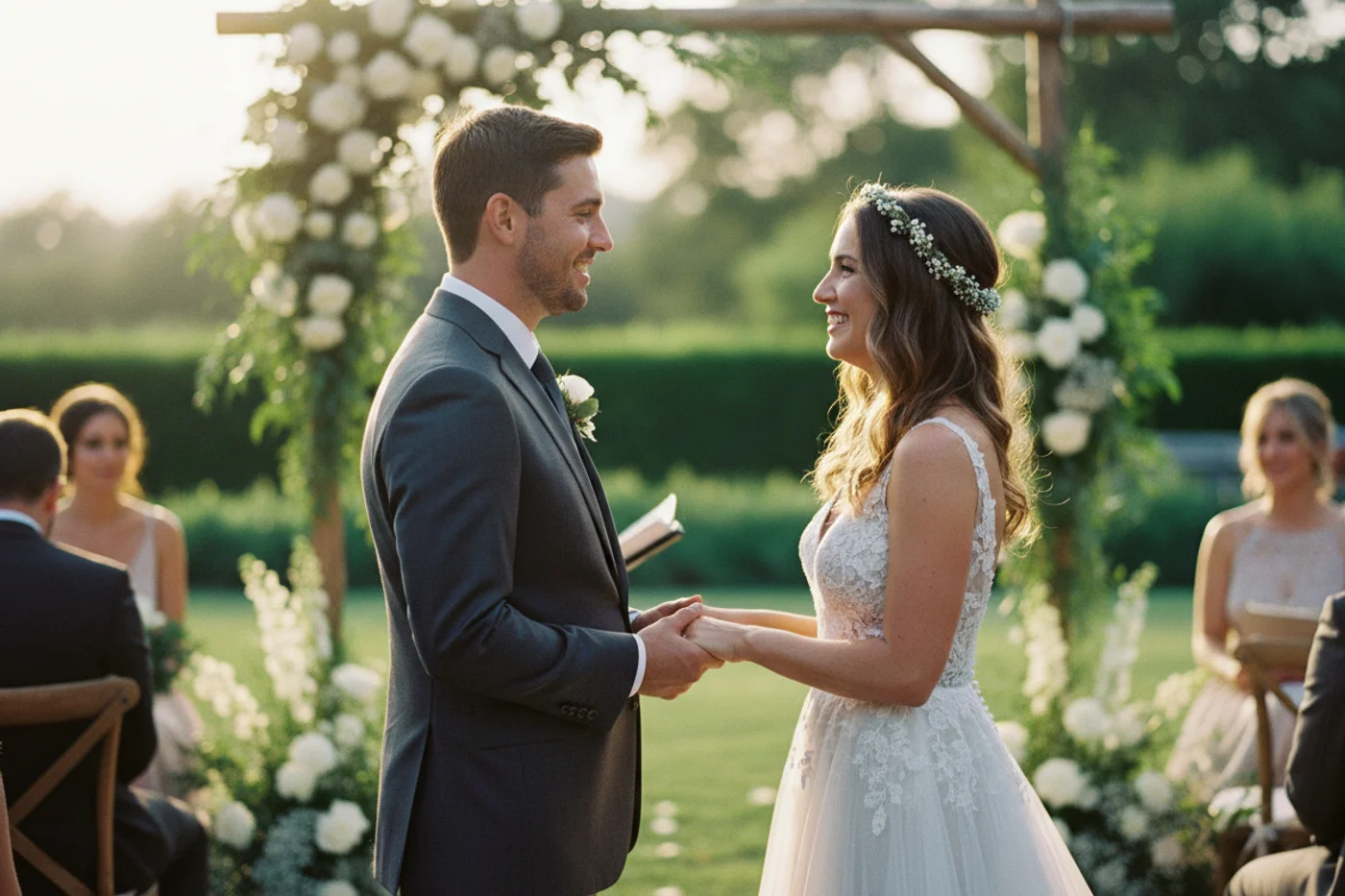
Wedding Vows Examples: For Him, For Her, and Every Kind of Couple
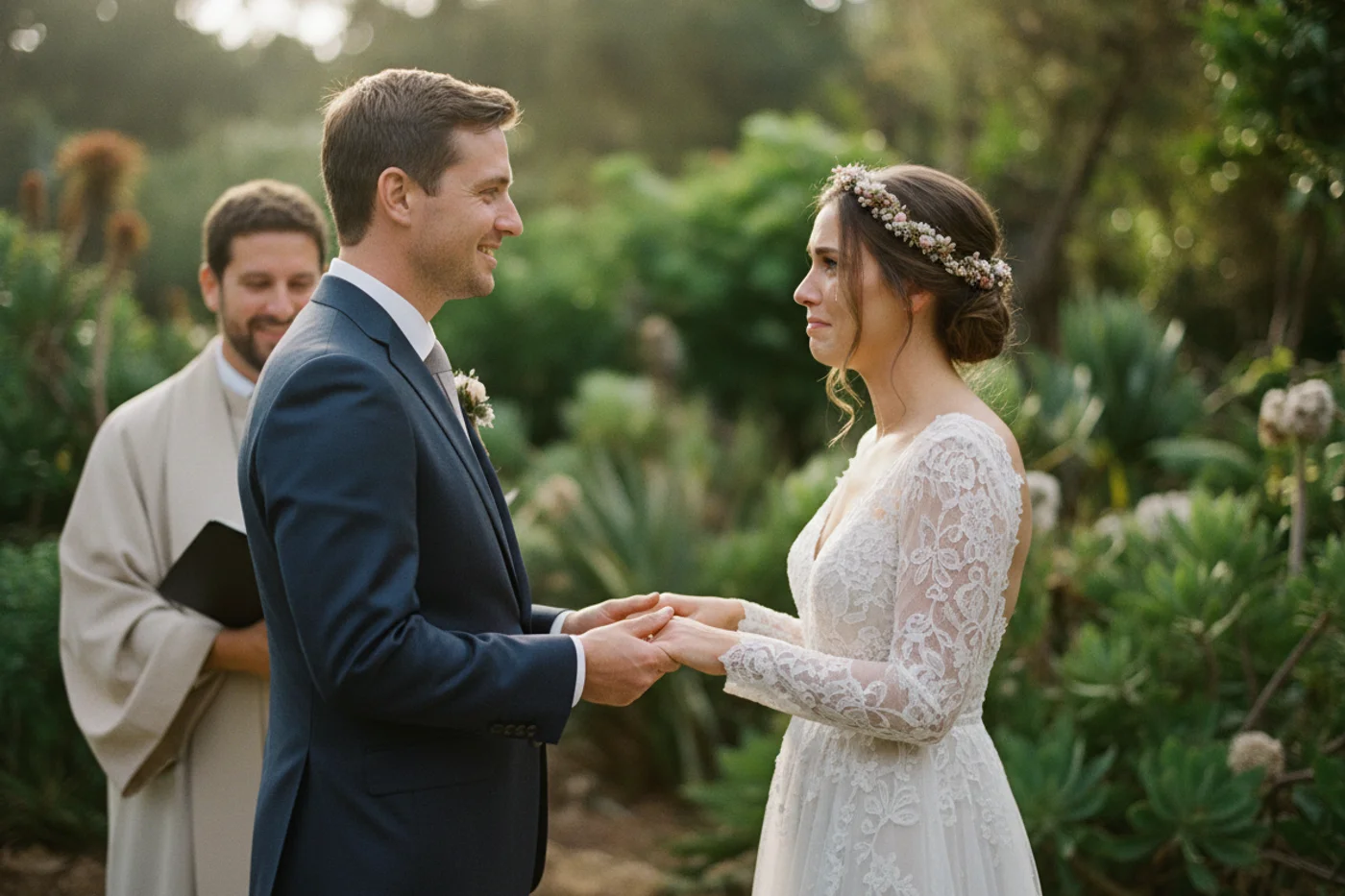
Wedding Vows: The Complete Guide (Legal Wording, Writing Your Own & Real Examples)
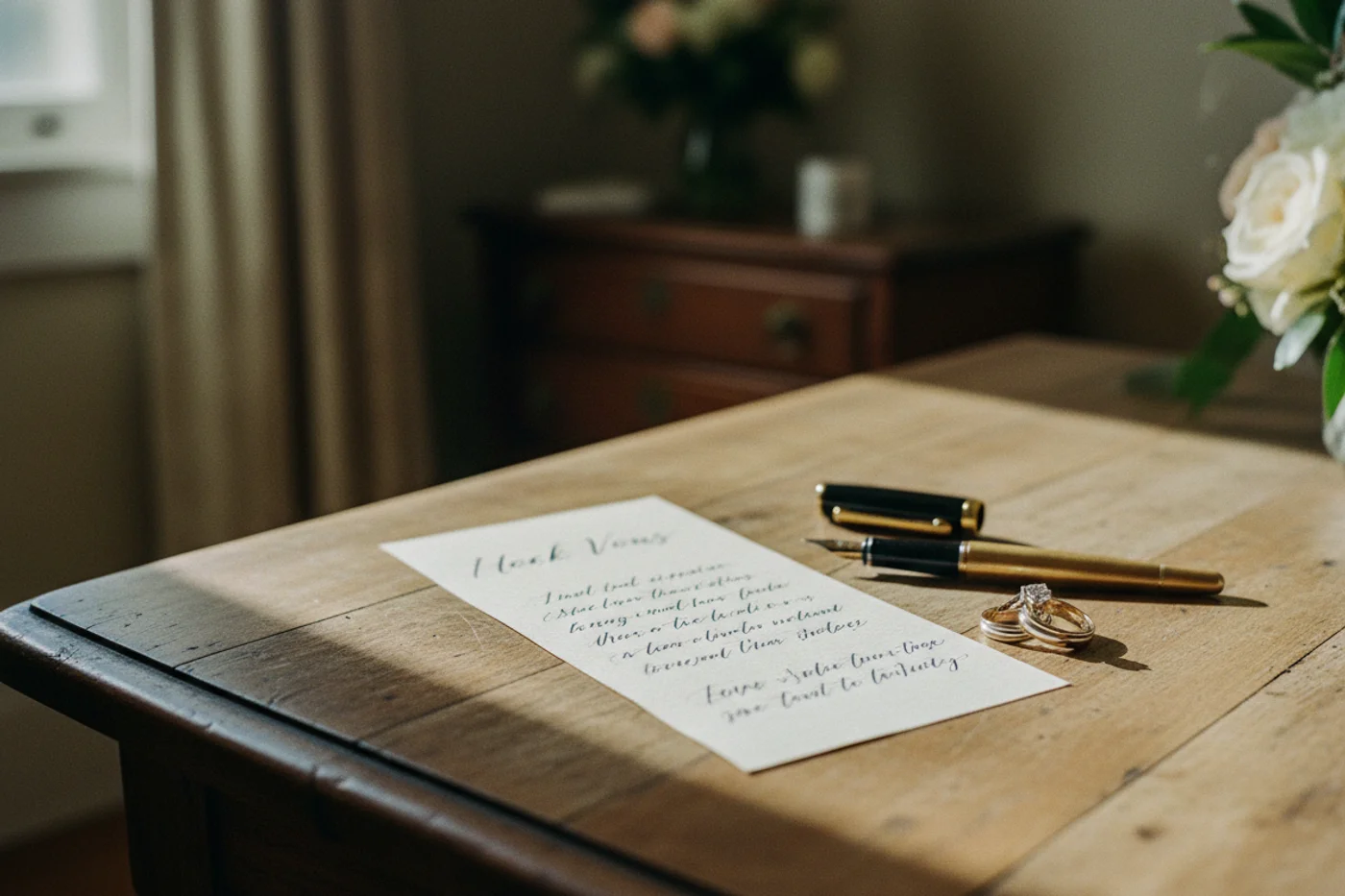
How to Write Your Own Wedding Vows (A Simple, Step-by-Step Formula)

Traditional Wedding Attire in South Africa: Zulu, Xhosa, Tswana, Sotho, Ndebele & Venda

Umembeso: The Zulu Gift-Giving Ceremony Explained
