The blank page is the hardest part of writing your own vows, by a wide margin. Everything after that first sentence gets easier, but almost everyone freezes at the exact same point: staring at an empty document, trying to compress an entire relationship into something that sounds like a vow rather than a diary entry or a toast. The fix isn't inspiration. It's structure. Answer the right questions in the right order, and a genuinely good set of vows falls out of the process almost by accident.
Step 1: Answer these five questions first, badly
Don't write vows yet. Write rough, unpolished, even ugly answers to these five questions instead. Nobody sees this draft but you.
- What's one specific moment you knew? Not "when I realised I loved you," but the actual scene: where you were, what happened, what they did or said. Specificity is what separates a real vow from a greeting card.
- What do you actually promise, in practice? Not "to always love you," which is true of almost every vow ever written, but something concrete: what you'll do on the hard days, what role you're committing to play in their life.
- What has changed in you because of them? A vow that only describes your partner says nothing about the relationship itself. The best ones show what the two of you have built together.
- What do you love about ordinary, unremarkable days with them? The big romantic gestures make good stories, but this question usually produces the line that makes your partner actually cry, because it proves you've been paying attention to real life, not just the highlight reel.
- What do you want the next chapter to look like? This is where the promise-for-the-future lives, and it's the natural place to close.
Write two or three sentences per question, badly, without editing as you go. This step alone usually produces more usable material than an entire evening spent trying to write finished vows from scratch.
Step 2: Pick your best answer to two or three questions, not all five
You now have rough answers to five questions and roughly 150 to 300 words is your actual target length. That math doesn't work if you try to use everything. Read back through what you wrote and find the two or three answers that are the most specific, the most surprising, or the most emotionally honest, the ones that could only have been written about your specific relationship, not any relationship. Cut the rest, even the parts you like. A vow that tries to cover everything ends up saying very little about anything.
Step 3: Build the shape
Most vows that land well follow a version of this structure, in this order:
- Opening: a direct statement to your partner, not a general reflection. Start with "you" or their name, not "when I think about love."
- The specific moment or trait from your best answer in Step 2 — this is where you earn the emotional response, not in the closing line.
- What you promise, stated plainly. This is the actual vow part, and it should be the most concrete section, not the most poetic.
- A closing line that lands cleanly. Short is almost always better here. The single most common mistake in amateur vows is a strong middle section followed by a closing line that trails off or tries to add one more idea. End on the clearest sentence in the whole piece.
Step 4: Write the full draft, then cut it by a third
Write the whole thing in one sitting once you have the shape, without stopping to second-guess word choices. Then leave it for at least a day. When you come back, read it aloud, at the pace you'd actually speak it standing in front of people, not the pace you'd read silently. Almost every first draft runs 30 to 50% too long, and the extra length is almost never the good part, it's usually a second or third example making the same point the first one already made. Cut ruthlessly. A tight 200-word vow lands harder than a rambling 400-word one, every time.
Step 5: Get one honest read, not ten opinions
Share your draft with exactly one person you trust to be honest, not encouraging. Not your partner, obviously, and not a group chat where everyone will tell you it's perfect regardless. One person, asked one specific question: "does this sound like me, and is there a section that drags?" Ten opinions produce ten different edits and a vow that no longer sounds like anyone. One honest read catches the two or three things that actually need fixing.
A simple template to start from
If the blank page is still winning, start from this skeleton and replace every bracket with your own material:
[Name], I remember [specific moment], and that's when I knew [what you knew]. Since then, you've [specific way they've changed you or shown up for you]. I promise to [concrete promise], especially on the days when [specific hard thing]. I love who I am with you, and I want [specific hope for the future] with you, for the rest of my life.
That's a scaffold, not a finished vow, and it will sound generic if you leave the brackets as vague concepts rather than filling them with the actual specific details from Step 1. The specificity is what makes it yours. Once you've got a full draft this way, our collection of real wedding vows examples is a good place to compare tone and see how other couples handled the same structure differently.
What to do if you're stuck on the opening line
The opening line causes more stalling than any other part of the vow, mostly because people try to write something profound before they've earned it. Skip it. Write the middle sections first, the specific moment and the promise, and come back to the opening once you actually know what the vow is about. It's much easier to write a strong first line for a vow that already exists than to write a strong first line for a blank page and hope the rest follows from it.
How this differs from a wedding speech
If you're also giving a speech at the reception, or someone in your family is, keep the two completely separate in your head while writing. Vows are said directly to your partner, in the moment, and are inherently private even though a room full of people is watching. A speech is written for the guests, is allowed to be funnier and more anecdotal, and comes later in the day. Vows that accidentally read like a toast, addressed to the room rather than to your partner, are one of the most common ways personal vows go slightly wrong. If you catch yourself writing "and everyone here knows how much she loves..." you've drifted into speech territory. Redirect it back to your partner directly.
Frequently asked questions
How do I start writing my wedding vows if I have no idea what to say?
Skip trying to write finished vows first. Answer five specific questions badly and briefly instead: the moment you knew, what you actually promise in practice, how you've changed, what you love about ordinary days together, and what you want the future to look like. The finished vow comes from shaping your best two or three answers, not from starting with a blank page and trying to write something profound immediately.
How long should my wedding vows be?
150 to 300 words, roughly 30 seconds to 2 minutes read aloud at a natural pace. Time a full read-through out loud before you consider a draft finished — almost every first draft runs 30 to 50% longer than it should.
Should my wedding vows rhyme or sound poetic?
No, not unless that's genuinely your natural voice. Vows that reach for poetic language often sound less sincere, not more, because the effort shows. Plain, direct, specific language almost always lands harder than ornate phrasing.
Is it okay to use a template for my wedding vows?
Yes, as a starting scaffold, provided you fill it with real, specific details from your own relationship rather than leaving it generic. A template with vague placeholders left half-filled reads as generic. The same template filled with specific memories and promises reads as completely personal.
Should I show my partner my vows before the wedding?
Most couples don't, and the element of surprise is often part of what makes the moment work. There's no rule against it if you'd both rather share drafts beforehand, but agree on roughly matching length either way so one partner's vows don't dramatically outlast the other's.
What if I'm not a good writer?
Work from the five-question method rather than trying to write polished prose from a blank page. Plain, honest, specific sentences beat elaborate writing every time in this particular format. Vows are judged on sincerity and specificity, not literary style.
Once you've got a working draft, compare it against real wedding vows examples for him and her to see the structure in action, or look at traditional and religious vow wording if you decide you'd rather adapt something time-tested than write from scratch. For the full picture of what's legally required alongside your personal vows, start with our complete wedding vows guide.
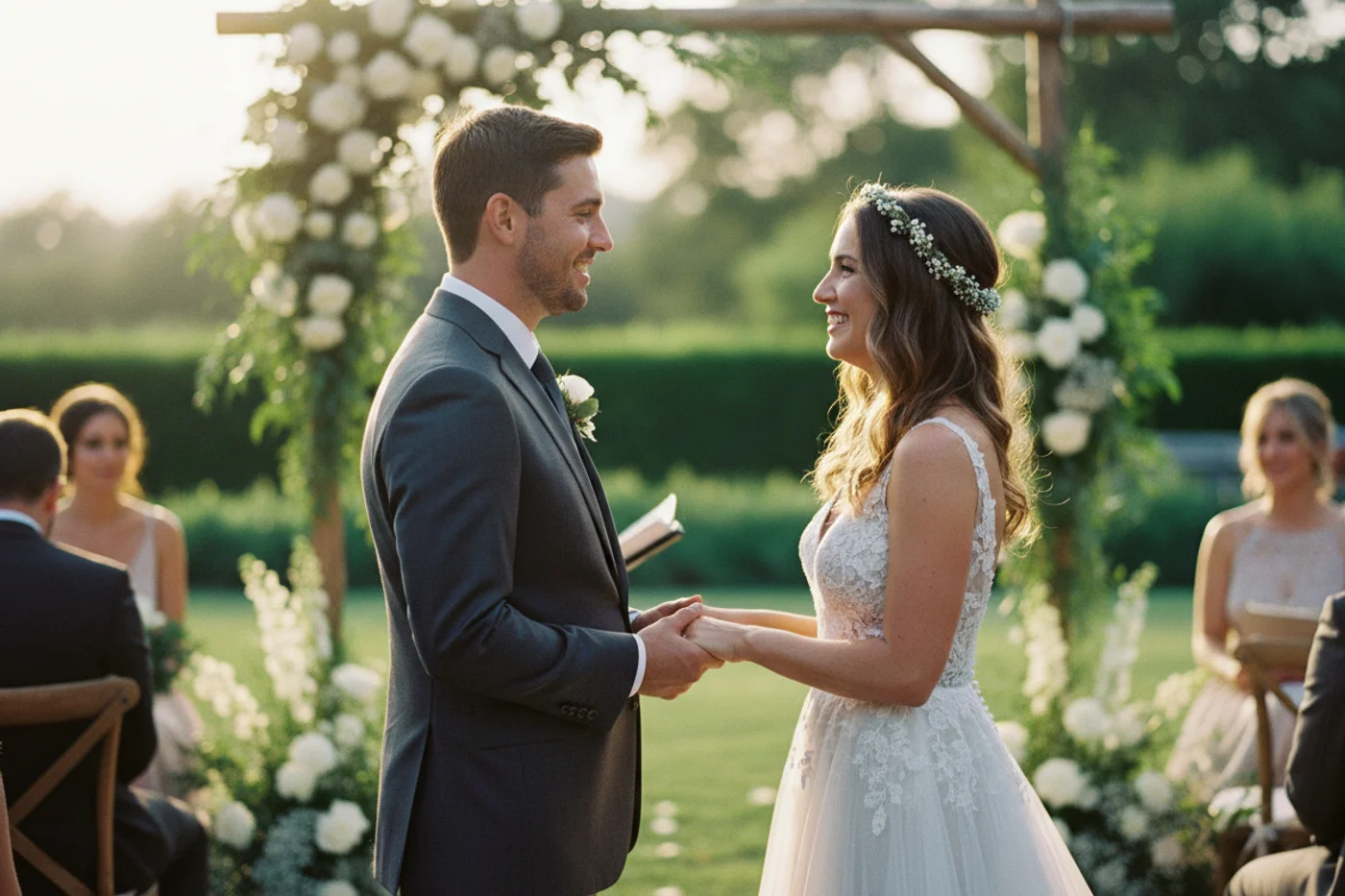
Wedding Vows Examples: For Him, For Her, and Every Kind of Couple
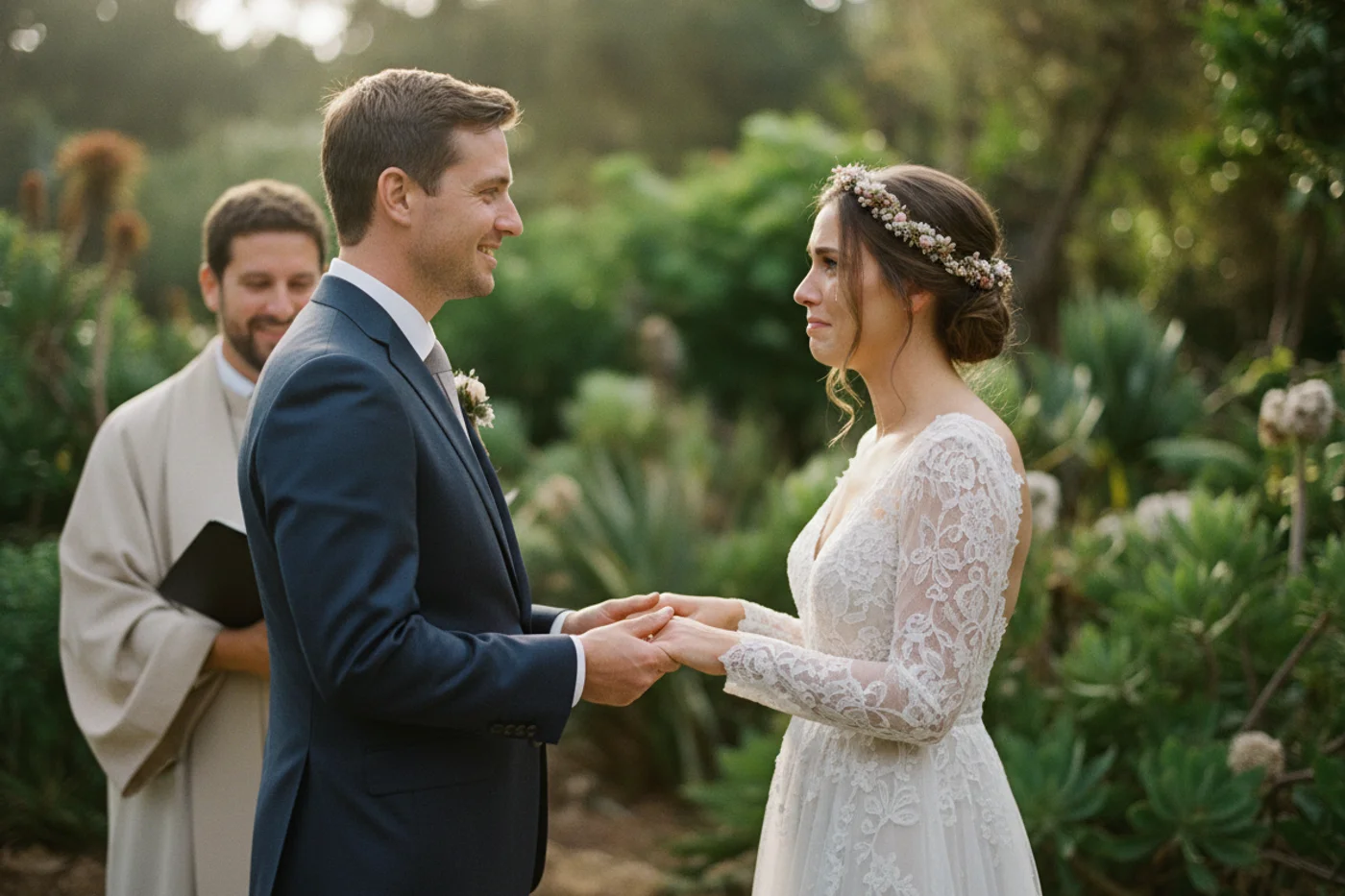
Wedding Vows: The Complete Guide (Legal Wording, Writing Your Own & Real Examples)

Traditional & Religious Wedding Vows: Full Wording by Faith and Tradition

Traditional Wedding Attire in South Africa: Zulu, Xhosa, Tswana, Sotho, Ndebele & Venda

Umembeso: The Zulu Gift-Giving Ceremony Explained
