He's popped the question, the ring is on your finger, and somewhere between the celebration calls and the group chat exploding with congratulations, a quieter thought creeps in: where on earth do you actually start? Planning a wedding can feel like staring up a mountain with no path marked out. The trick is to stop looking at "the wedding" as one enormous task and start seeing it as a series of smaller decisions, made in the right order. Get the sequence right and everything downstream gets easier. Get it backwards and you'll spend months undoing choices you made too early.
Start With the Budget, Not the Pinterest Board
It's tempting to dive straight into venues and dresses, but the budget is the decision that shapes every other decision. Sit down with your partner, and with anyone contributing financially, and agree on a realistic total before you fall in love with anything you can't afford. South African weddings vary enormously in cost. A relaxed farm-style wedding for 80 guests can come in under R150,000, while a full-service hotel or wine estate wedding for 150 guests with a live band, florist, and multi-course meal can run past R500,000. Neither is "right" — what matters is knowing your number before you start signing quotes.
Once you have a total, break it into rough percentages: venue and catering usually eat the biggest share (40-50%), followed by photography and videography (10-15%), attire (10%), flowers and decor (10%), entertainment (8-10%), and stationery, hair, makeup, and miscellaneous costs making up the rest. Build in a contingency of at least 5-10% for the inevitable extras nobody warns you about — delivery fees, corkage, overtime charges, a forgotten alteration.
Pick Your Season Before You Pick Your Date
South Africa's climate swings hard between regions, so "wedding season" means different things depending on where you're getting married. In Cape Town and the Winelands, summer (November to February) brings long golden evenings and near-guaranteed sun, but also peak pricing and venues booked a year or more in advance. Gauteng's summer months bring lush green landscapes but also afternoon thunderstorms, so an outdoor ceremony needs a solid wet-weather backup. Winter (June to August) across most of the country means crisp, clear days, dramatically lower vendor rates, and a much easier time securing your first-choice venue and photographer — the trade-off is shorter days and colder evenings, which matters if you're planning an outdoor reception.
Once you've settled on a season, narrow it to a date. Avoid long weekends and school holidays unless you want to compete with family getaways for accommodation and flights, and check that your date doesn't clash with major local events in your chosen town — wine festivals, marathons, and matric holidays can all book out accommodation for kilometres around a popular venue.
Guest List: The Decision That Drives Everything Else
Your guest count determines your venue options, your catering cost, your seating logistics, and even your stationery quantities, so nail it down early rather than let it creep upward. Start with a rough number based on budget per head, then build the list in tiers: immediate family and closest friends first, then extended family and colleagues, then a "if budget allows" tier you can add back in later. Agree with your partner up front on how contentious categories get handled — work colleagues, childhood friends you've drifted from, plus-ones for people in new relationships. Sorting this early avoids awkward negotiations three months before the day when the caterer needs final numbers.
Lock In the Big Three: Venue, Photographer, Caterer
With a budget, a season, and a rough guest count in hand, you're ready to book the vendors that get snapped up first. Popular venues and in-demand photographers in Cape Town, Johannesburg, Durban, and the Garden Route are often booked twelve to eighteen months ahead for peak-season dates, so these are not the bookings to leave for later. Visit at least three venues before deciding, and ask each one directly what's included versus what you'll need to source separately — tables, chairs, linen, a sound system, and setup/breakdown time are common gaps in a venue-only quote.
For photography, look past the highlight reel and ask to see a full, unedited wedding gallery so you know what an entire day of their work looks like, not just the ten best frames. Confirm turnaround time for the final gallery, how many hours of coverage are included, and whether a second shooter is part of the package — for weddings over 100 guests, a second shooter is worth the extra cost to catch both the ceremony details and candid reactions at once.
A Rough Timeline That Actually Works
Every wedding is different, but this order has proven itself again and again for South African weddings of a year or so in the planning:
- 9-12 months out: Set the budget, choose the date and venue, book the photographer and caterer, start the guest list.
- 6-9 months out: Book the florist, DJ or band, and any hair and makeup artists. Start dress shopping — bridal gowns often need four to six months for ordering and alterations.
- 4-6 months out: Send save-the-dates, finalise the menu and cake, book transport and accommodation for out-of-town guests, sort the marriage officer.
- 2-3 months out: Send formal invitations, finalise the order of ceremony, do a hair and makeup trial, confirm final details with every vendor.
- 4-6 weeks out: Confirm final guest numbers and seating plan, finalise the run sheet with your venue coordinator or planner, do a final dress fitting.
- Final week: Confirm arrival times with every vendor, delegate day-of tasks to your bridal party, pack an emergency kit, and actually try to sleep.
Don't Skip the Paperwork
Amid the excitement of flowers and cake tastings, the legal side of getting married is easy to forget until the last minute. In South Africa, you'll need a marriage officer registered with the Department of Home Affairs (this can be a civil marriage officer, a religious officiant registered as one, or a Home Affairs official), and both partners need valid identity documents. If either of you was previously married, you'll need proof that the prior marriage was legally dissolved. Decide early whether you want an antenuptial contract — if you're marrying without one in South Africa, you default into marriage in community of property, meaning joint ownership of assets and debts. Speak to an attorney well before the big day if you want a different arrangement, since an antenuptial contract must be signed before the wedding, not after.
Delegate Ruthlessly
One of the biggest planning mistakes is trying to hold every decision and every day-of task yourself. Appoint a point person — a wedding planner if your budget allows, or a trusted, organised friend or family member if it doesn't — to handle vendor coordination on the day itself. This frees you up to actually be present at your own wedding instead of fielding questions about where the extra chairs go. Give your bridal party specific, clearly defined jobs well in advance rather than vague "please help out" requests; people show up better when they know exactly what's expected of them.
Protect Your Relationship While You Plan
Wedding planning has a way of surfacing tension that has nothing to do with tablecloths — old family dynamics, differing views on spending, disagreements about whose traditions take priority. Schedule regular check-ins with your partner that are explicitly not about wedding logistics, and agree early on how you'll handle disagreements about money or family expectations. The healthiest engaged couples treat planning as practice for the kind of teamwork marriage actually requires: compromise, clear communication, and occasionally agreeing to disagree gracefully.
Common First-Time Planning Mistakes
A few missteps show up again and again in first-time wedding planning, and most of them are avoidable once you know to watch for them. The first is booking a venue before confirming your realistic guest count, which either leaves you rattling around an oversized space or, worse, trying to squeeze 180 people into a room built for 120. The second is underestimating how long alterations, custom stationery, and made-to-order dresses actually take — a bridal gown ordered from overseas can take four months to arrive before alterations even begin, so leaving this until three months out puts you dangerously close to the wire.
The third mistake is assuming vendors are interchangeable on price alone. A caterer quoting half the going rate for your guest count is usually cutting corners somewhere, whether that's portion sizes, staff numbers, or backup equipment if something breaks on the day. Ask what happens if a fridge fails or a delivery is delayed — a seasoned vendor will have an answer ready. The fourth is forgetting that weather, load shedding, and traffic are all real variables in South African event planning. A generator on standby, a marquee with proper sidewalls, and a buffer built into your ceremony start time can save a day that would otherwise unravel.
Building In Moments Just for the Two of You
Somewhere between greeting two hundred guests and posing for the fortieth family photo, it's easy to lose the actual two of you in your own wedding day. Talk to your photographer in advance about carving out fifteen or twenty minutes, ideally at golden hour, for just the two of you away from the reception noise. Couples who build this into the run sheet consistently say it's the part of the day they remember most clearly — not because it's the most photogenic moment, but because it's the only stretch of the day that's actually quiet.
The Final Word
No wedding goes entirely to plan, and that's fine. Rain arrives on cloudless-forecast days, caterers run twenty minutes behind, a bridesmaid's heel breaks on the dance floor. None of it ruins a wedding. What people remember, years later, is not whether the napkins matched the flowers exactly — it's whether the day felt like them, and whether they got to actually enjoy it instead of white-knuckling their way through a checklist. Plan thoroughly, then let go of the parts you can't control. That's the real skill in all of this.

What Wedding Apps Are Trending Now (And Which Ones Skip ZAR Entirely)

What Happens If It Rains On Your Wedding Day? A South African Rain-Plan Guide

How Much Does a Wedding Cost in South Africa? (2026 Budget Breakdown)
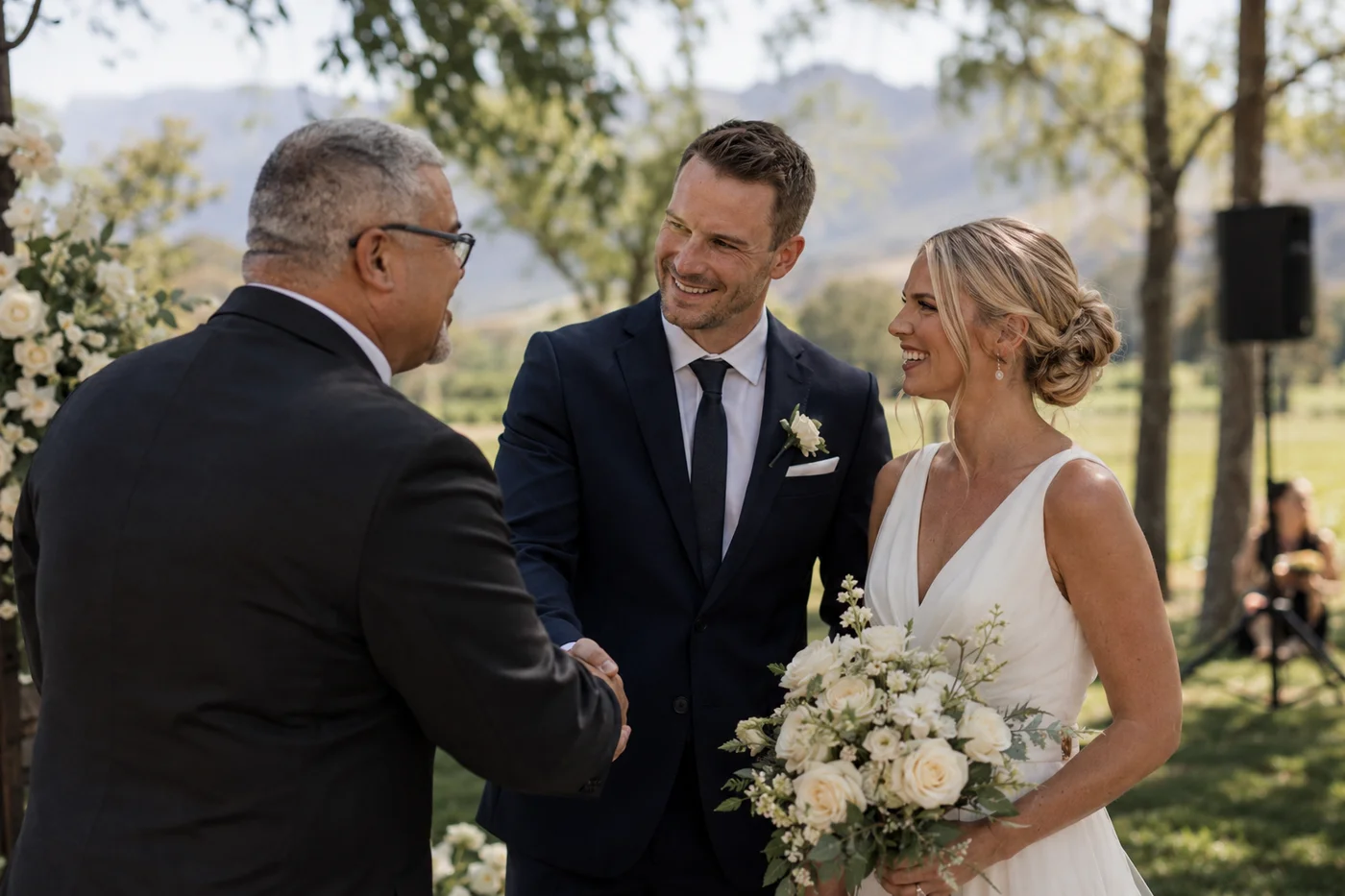
Huweliksbeampte in Suid-Afrika: Wie Mag Jou Wettig Trou
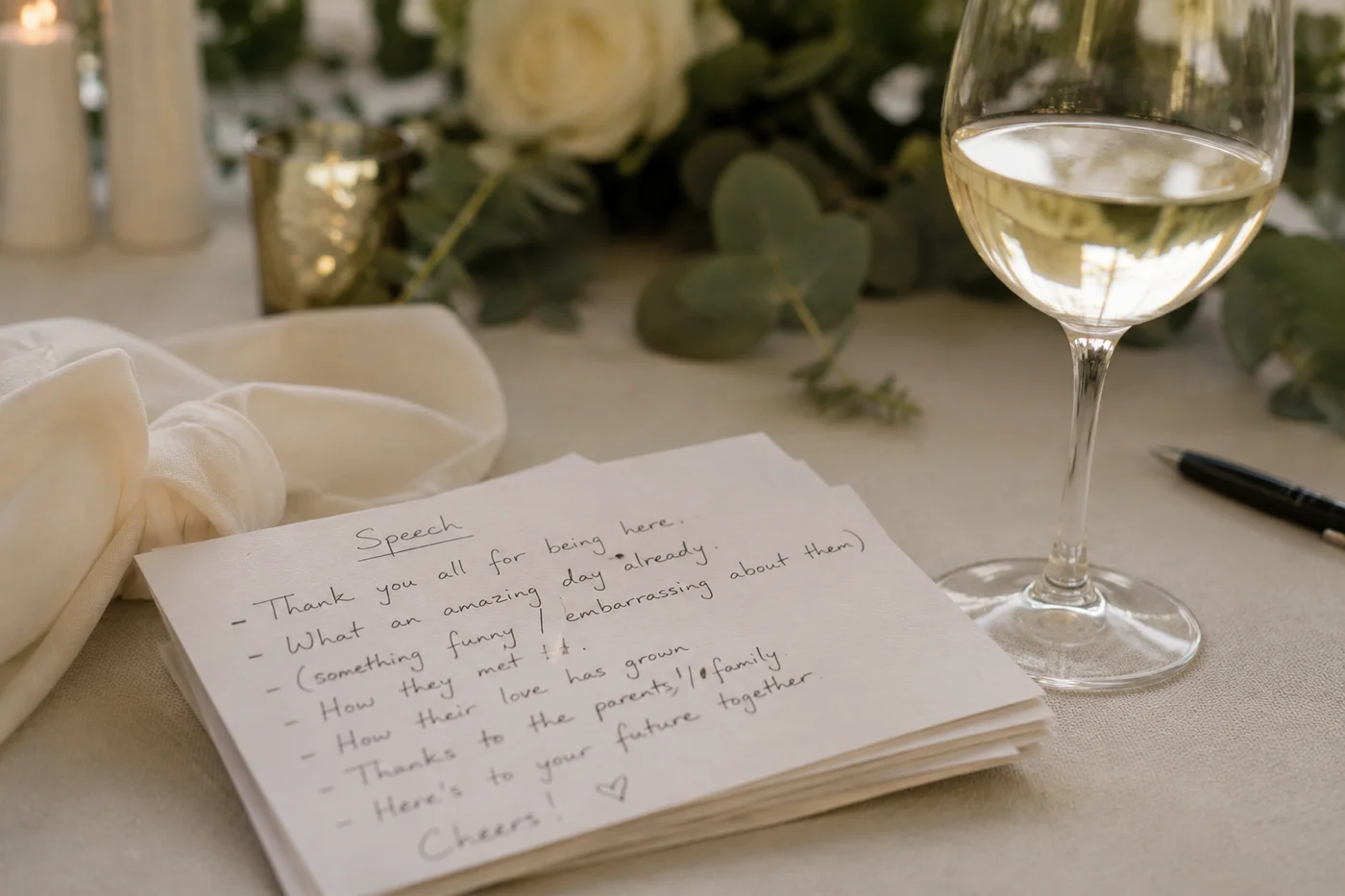
Bruidsmeisie Toespraak: Hoe om Dit met Hart te Doen