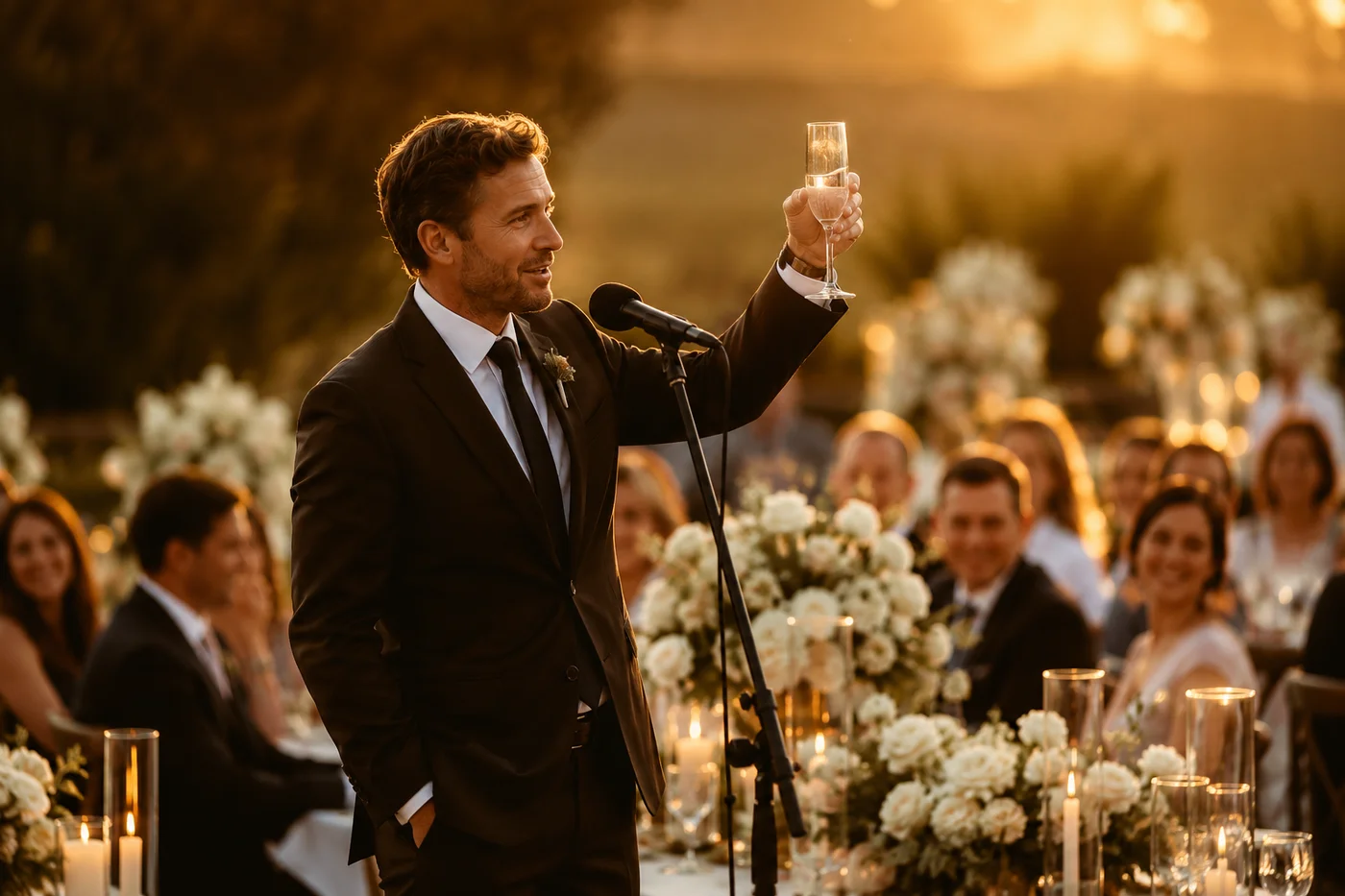
Your wedding day matters to you too, but let's be honest: for most brides, this is a day they've thought about, planned and stressed over for months, sometimes years, longer than you have. That doesn't make your role smaller. It makes it more important to get right. These twelve do's and don'ts will help you show up as the steady, supportive partner your fiancée actually needs, both in the run-up to the wedding and on the day itself.
Before the Wedding
1. Do Take Your Assigned Tasks Seriously
You'll have your own list of responsibilities, the venue walk-through, groomsmen's attire, transport, the honeymoon logistics, whatever's been divided your way. Get them done ahead of schedule, not the week before. Wedding planning is genuinely stressful, and every task you complete without needing a reminder takes real pressure off your fiancée's shoulders.
2. Do Show Up for the Decisions That Matter to You
Not every choice needs your input, cake icing colour is rarely a hill worth dying on, but the ones that genuinely matter to you (the venue, the guest list, the honeymoon, your own attire) deserve your full attention and opinion. Showing up for these conversations tells your fiancée you're an equal partner in building this day, not a passenger being dragged along.
3. Don't Dismiss Wedding Planning as "Not Your Thing"
It's fine if colour palettes and floral arrangements genuinely aren't your area of interest. It's not fine to use that as an excuse to opt out of the entire process, leaving your fiancée to plan alone while carrying the emotional and mental load by herself. Find the parts you can genuinely contribute to, budget, logistics, the guest list, vendor negotiations, and own them fully.
4. Do Manage Your Own Family
If your parents or relatives have opinions, requests or complaints about the wedding, it's your job to handle those conversations, not your fiancée's. Sparing her from playing referee between you and your own family is one of the most genuinely supportive things you can do during the planning process.
5. Don't Plan a Wild Bachelor Party Too Close to the Wedding
A big night out the week of the wedding is one of the most common and most avoidable planning mistakes. Schedule your bachelor party a few weeks out at minimum, giving yourself, and your best man, time to recover before the actual event. Nobody wants wedding photos of a groom who looks like he's still nursing a hangover.
6. Do Write Your Own Vows, Even If It's Hard
If your ceremony allows for personal vows, put in the effort to write something genuine rather than reaching for a generic template at the last minute. It doesn't need to be poetic or polished. It needs to be honest and specific to your relationship. Your fiancée will remember what you actually said far longer than she'll remember how eloquent it sounded.
On the Wedding Day
7. Do Give Her a Genuine, Unguarded Reaction When You See Her
The moment you see your bride walking toward you will likely be the first time you've seen her that day, and it's a moment she has thought about for a very long time. A warm, honest smile, not a performed one, instantly settles her nerves and reminds her exactly why she's marrying you. Don't worry about looking composed. Looking moved is far better.
8. Do Compliment Her, Specifically
Tell her she looks beautiful, but go further than that if you can: mention something specific, her hair, the dress, how much thought clearly went into every detail of the day. She's put an enormous amount of effort into this day looking exactly right, and specific, genuine compliments land far better than a generic "you look great."
9. Don't Drink Too Much Before the Ceremony
A drink or two to settle pre-ceremony nerves is fine. Arriving at the altar visibly impaired is not, and it's one of the fastest ways to turn a beautiful moment into an embarrassing memory that follows you around for years. Save the real celebrating for after the vows are said and the formalities are behind you.
10. Do Stay Present and Engaged Throughout the Day
It's easy to drift off with your groomsmen for a large chunk of the reception, catching up, having a few drinks, enjoying yourself away from the main event. Make the effort to circulate, thank guests for coming, and spend real time with your new wife throughout the day rather than treating the reception as your own separate party happening alongside hers.
11. Don't Forget to Thank the People Who Made the Day Possible
Parents, wedding party, vendors who went above and beyond, all of them deserve genuine acknowledgment, whether in your speech, in person, or both. A specific thank you, naming what someone actually did, means far more than a blanket "thanks everyone" tossed off at the end of your toast.
12. Do Remember Why You're There
Amid the logistics, the schedule, the photos, the seating charts and the small crises that inevitably crop up on any wedding day, take a genuine moment, even just thirty seconds, to actually notice what's happening: you're marrying the person you've chosen to build a life with. Everything else is just the setting for that one fact.
What to Do If You're Genuinely Overwhelmed
Some grooms find the entire wedding-planning process more stressful than they expected, not because they don't want to be involved, but because there are simply a lot of decisions, a lot of opinions, and a lot of family dynamics to manage at once. If that's you, say so directly rather than going quiet or checking out. Tell your fiancée plainly which parts of the process feel overwhelming and ask together how to divide things more sustainably. A wedding planner, even a partial-service one who only handles the final month of logistics, can be a worthwhile investment if the process is genuinely straining the relationship rather than bringing you closer together, which is meant to be the entire point of planning a life event together in the first place.
Handling the Money Conversation
Weddings are expensive, and how you and your fiancée talk about money during the planning process often sets a pattern for how you'll handle bigger financial decisions once you're married. Be upfront about what you can realistically contribute, raise concerns about overspending as they come up rather than letting resentment build silently, and treat the wedding budget as a genuinely shared decision rather than something you either control unilaterally or ignore entirely and hope works itself out. Couples who practise honest, calm money conversations during wedding planning tend to carry that same skill into their marriage, which is arguably one of the more valuable things to get right before the big day itself.
Why the Small Things Matter More Than You'd Think
None of these twelve points are complicated or demanding. That's exactly the point. Being a good groom, before and during the wedding, is less about grand romantic gestures and far more about consistent, reliable follow-through on the small stuff: doing your assigned tasks on time, managing your own family's expectations, showing up fully present rather than half-checked-out. Brides remember who carried their share of the planning load and who didn't, and grooms who take this seriously tend to find the entire lead-up to the wedding noticeably less stressful for both partners, not just their fiancée.
A Note on Nerves
It's worth saying plainly: it's completely normal to feel nervous, overwhelmed or even a little detached from parts of the planning process, especially if this isn't naturally your area of interest. The goal isn't to fake enthusiasm about napkin colours you genuinely don't care about. It's to be honest about what you can meaningfully contribute, follow through reliably on it, and be fully present for the parts of the day that matter most: your vows, your reaction when you see her, the way you treat her and your guests throughout the reception. Getting those right will matter far more, in the long run, than getting every planning decision perfect.
Your Groomsmen Are Your Responsibility Too
Just as your fiancée is managing her bridal party, you're responsible for keeping your groomsmen organised: fittings booked on time, a clear timeline for the bachelor party and the day itself, and expectations set early about what's expected of them (speeches, transport, arrival times). A disorganised groomsman scrambling for a suit fitting the week before, or missing at photos because nobody told him where to be, becomes your problem to solve on the day itself, so get ahead of it well in advance.
Final Thought
A good wedding day performance from the groom isn't about perfection. It's about showing your fiancée, through consistent action rather than empty words, that you take this day and this marriage seriously. Handle your responsibilities, manage your own family, show up present and sober, and let her see how much this actually means to you. Everything else, the seating charts, the playlist, the exact shade of the flowers, will sort itself out. What she'll remember is how you made her feel on the day she became your wife.

What Wedding Apps Are Trending Now (And Which Ones Skip ZAR Entirely)

What Happens If It Rains On Your Wedding Day? A South African Rain-Plan Guide

How Much Does a Wedding Cost in South Africa? (2026 Budget Breakdown)
Huweliksbeampte in Suid-Afrika: Wie Mag Jou Wettig Trou
Bruidsmeisie Toespraak: Hoe om Dit met Hart te Doen