Being asked to stand as best man is one of the clearer compliments a friendship can pay: it means the groom trusts you not just to show up, but to hold things together when it matters. The role carries more responsibility than most first-time best men expect. It's not just a title that comes with a good seat and a toast to give — it starts the moment you say yes and doesn't finish until the newlyweds have safely made their exit at the end of the night.
Before the Wedding: The Groundwork Nobody Sees
Most of a best man's real work happens in the weeks and months leading up to the wedding, quietly, without much fanfare. This typically includes:
- Organising the stag do. Traditionally the best man's job, and one worth doing properly, factoring in the groom's actual preferences rather than defaulting to whatever's loudest. Coordinate with the groomsmen on logistics, budget, and dates well in advance, ideally avoiding the week directly before the wedding.
- Helping the groom with his suit. Fittings, alterations, and making sure everything is collected and ready with time to spare. A rushed suit collection two days before the wedding is a stress nobody needs.
- Coordinating the groomsmen. Making sure everyone knows their role, their attire requirements, and key dates. You're effectively the project manager for the groom's side of the bridal party.
- Managing the rings. Confirming who's collecting them, when, and being the one responsible for having them safely on the day. This sounds simple until you're the person patting your jacket pocket forty times during the ceremony to check they're still there.
- Writing the speech early. Don't leave this until the week of the wedding. A good best man's speech takes several drafts, and reading it aloud to yourself (or a trusted friend) more than once before the day catches lines that read well but don't land when spoken aloud.
The Week Before: Final Logistics
In the final week, the best man's role shifts toward confirming details rather than planning them. Check in with the groom about transport arrangements to the ceremony, confirm the timing of the getting-ready morning, and make sure you know exactly where and when the groomsmen need to be. If the wedding involves travel, particularly to a farm, wine estate, or game reserve venue outside the city, confirm accommodation and transport for the groom's side well before the week runs out, since these details have a habit of falling through the cracks when everyone assumes someone else has handled them.
This is also a good time to do a final run-through of your speech, and to check with the groom whether there's anything specific he'd rather you didn't mention. A best man's speech works best with a bit of gentle roasting, but it should never include anything that could genuinely embarrass the groom in front of family, in-laws, or colleagues who might be in the room.
On the Morning of the Wedding
Your first job on the wedding day itself is simple but critical: get the groom to the ceremony calm, dressed, and on time. This means being the one who keeps an eye on the clock while everyone else is distracted by nerves, photos, and last-minute grooming. If the getting-ready morning is being photographed or filmed, a bit of easy, natural conversation with the groom helps keep the mood relaxed rather than anxious, which photographs and feels better than a tense, silent room.
Double-check that you have the rings, that any speech notes or props are packed, and that the groom has everything he needs (a spare tie, cufflinks, his vows if he's written his own). Small oversights like a forgotten boutonniere or an untied shoelace are easy to miss in the rush and easy to fix if you catch them early.
During the Ceremony
Traditionally, the best man stands beside the groom throughout the ceremony, holds the rings until the moment they're needed, and hands them over on cue. Beyond that formal role, keep half an eye on the practical flow of the ceremony: making sure the groomsmen are where they need to be, that the processional order runs smoothly, and that nothing derails the moments the couple has been planning for months. If something does go slightly off script, a dropped program, a late arrival, a technical hiccup with the sound system, staying visibly calm helps everyone else stay calm too.
At the Reception
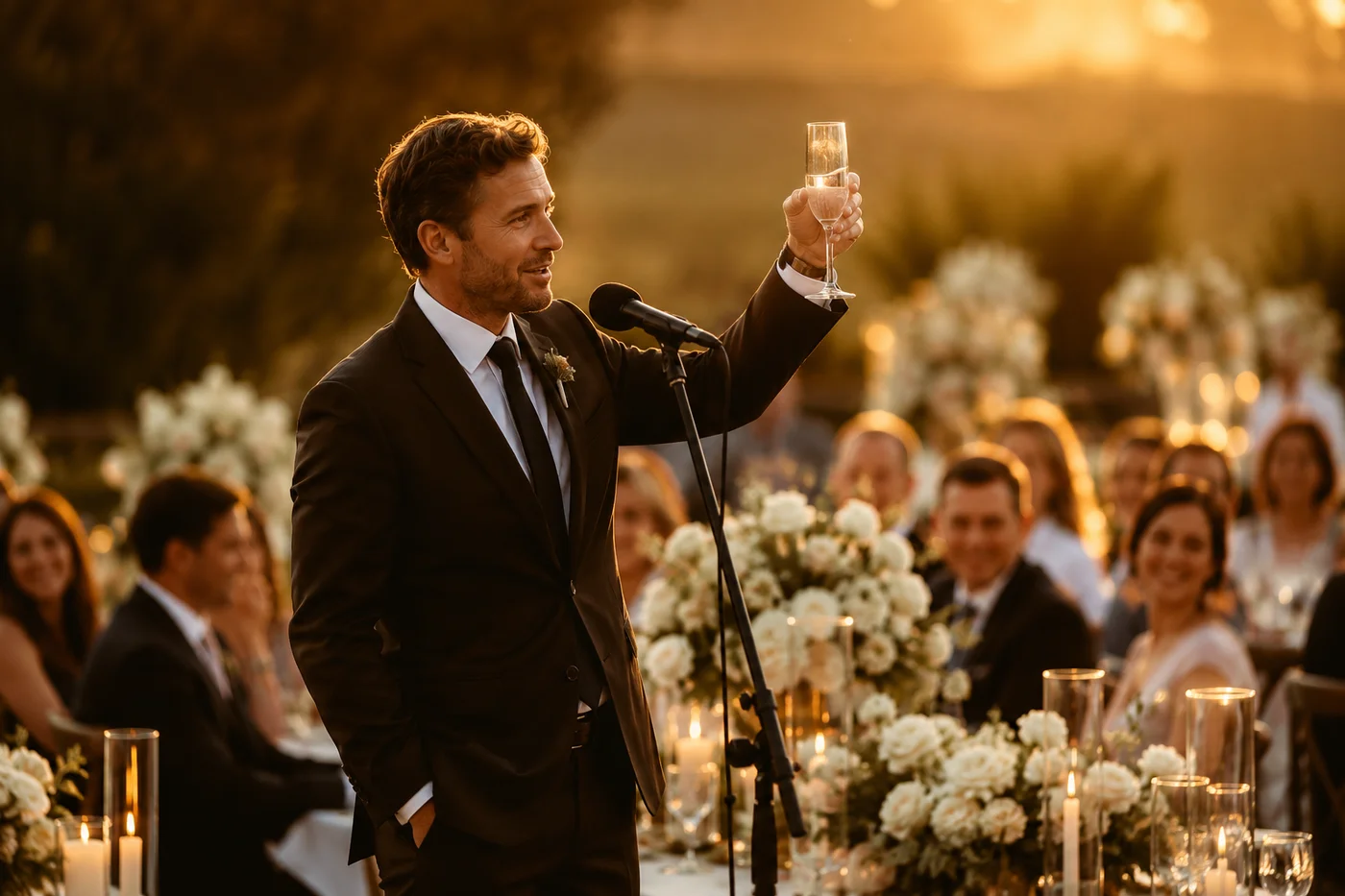
This is where the best man's public duties really come into focus. Depending on the wedding, you may be asked to act as master of ceremonies for part or all of the evening, introducing speeches, calling the couple onto the dance floor for their first dance, and keeping the evening's schedule moving without letting it feel rushed. Even if a separate MC has been hired, the best man's speech remains one of the evening's most anticipated moments.
A genuinely good best man's speech balances warmth and humour without tipping into embarrassment. Structure matters more than most first-timers realise: open with something that settles the room and introduces you, move into a story or two that captures who the groom is (and ideally, how he met the bride, if you were around for that), and close with a heartfelt, sincere toast to the couple. Keep it to somewhere between three and five minutes; a speech that runs long loses its impact regardless of how funny the material is. Avoid ex-partners, anything that could embarrass the groom's family, and inside jokes that only three people in the room will understand.
Practical Reception Duties
- Help ensure the groomsmen are seated and settled, and that any wedding party responsibilities (favours, place cards, gift table) are covered.
- Keep a discreet eye on the groom's wellbeing through the evening — pacing him if drinks are flowing freely, and making sure he's actually eating something amid the socialising.
- Coordinate the couple's exit at the end of the night, whether that's a sparkler send-off, confetti, or simply making sure their transport is waiting when they're ready to leave.
- Look after any gifts, cards, or cash envelopes given to the couple during the reception, keeping them secure until they can be handed to a trusted family member for safekeeping.
The Quieter, Less Official Duties
Beyond the checklist items, the best man plays an emotional role that's harder to put into a bulleted list. You're often the person the groom vents to when planning stress boils over, the one who talks him down from pre-ceremony nerves, and the steady presence he can lean on without needing to explain why. Being genuinely present and available in the weeks before the wedding, not just showing up for the big logistics, is often what a groom remembers most fondly afterward.
It's also worth checking in on the bride's side occasionally, particularly if you know the maid of honour or bridesmaids well, since a wedding runs more smoothly when both sides of the bridal party are coordinating rather than working in isolation from each other.
What to Do When Something Goes Wrong
Every wedding has at least one moment where something doesn't go to plan, and part of the best man's real value is handling it without making it a bigger deal than it needs to be. A groomsman running late, a misplaced boutonniere, a best man's toast microphone that cuts out halfway through, none of these are catastrophes, but how they're handled shapes whether the day feels smooth or chaotic. Keep a small emergency kit on hand if you can: a spare tie, safety pins, plasters, a phone charger, and the contact details of the venue coordinator or planner. If something needs fixing quietly and quickly, it's usually the best man who's expected to sort it without pulling the groom's attention away from actually enjoying his own wedding.
It's also worth having a backup plan for your own speech. Nerves affect even naturally confident public speakers, and having your key points written on a small card, rather than relying entirely on memory, is a sensible safety net rather than a sign you're underprepared.
Supporting the Groom Emotionally, Not Just Logistically
Weddings surface more emotion than people expect, even in grooms who consider themselves fairly unflappable. A good best man reads the room, and reads the groom, well enough to know when he needs a joke to break tension and when he simply needs someone standing quietly next to him. This might mean a private word of encouragement right before the ceremony starts, or simply being a steady, familiar face somewhere in his eyeline during a moment that feels overwhelming. This part of the role rarely gets written into best man checklists, but it's often the part grooms remember most vividly afterward.
A Simple Best Man's Checklist
- Organise the stag do with the groom's actual preferences in mind.
- Help with suit fittings and collection timelines.
- Write and rehearse the speech well in advance, with key points on a card as backup.
- Confirm rings, transport, and accommodation logistics the week before.
- Pack a small emergency kit: spare tie, safety pins, plasters, phone charger, venue coordinator's number.
- Keep the groom calm, dressed, and on schedule on the morning of.
- Hold the rings and support the ceremony's flow.
- Deliver the speech, MC where needed, and coordinate the send-off.
None of this needs to be perfect. Grooms remember effort and steadiness far more than flawless execution. Show up early, stay calm when something inevitably goes sideways, and give a speech that comes from somewhere real rather than a template pulled off the internet, and you'll have done the job properly.

What Wedding Apps Are Trending Now (And Which Ones Skip ZAR Entirely)

What Happens If It Rains On Your Wedding Day? A South African Rain-Plan Guide

How Much Does a Wedding Cost in South Africa? (2026 Budget Breakdown)
Huweliksbeampte in Suid-Afrika: Wie Mag Jou Wettig Trou
Bruidsmeisie Toespraak: Hoe om Dit met Hart te Doen