Organising a wedding takes a great deal out of a bride, and by the time speeches come up in the planning conversation, it's tempting to decide you already have enough on your plate without adding a public speaking commitment to the list. Traditionally, brides didn't speak at their own weddings at all: the father of the bride went first, followed by the groom and then the best man, all men, all expected to carry the emotional and comedic weight of the day on your behalf.
That tradition has faded considerably, and for good reason. A modern wedding speech from the bride is one of the only moments in the entire day where you get to address every single guest directly, in your own words, thanking them and telling them, in your own voice, what this day and this marriage actually mean to you. It's a genuine opportunity, not an obligation, and if you want to take it, here's how to do it well.
Decide Whether You Want to Speak At All
There's no rule that says you must give a speech, and choosing not to is a completely legitimate decision if public speaking genuinely isn't for you or if you'd rather your new spouse speak on behalf of you both. If you do want to speak but the idea of doing it solo feels overwhelming, consider speaking jointly with your partner, an increasingly popular option at more relaxed, modern weddings, where you take turns or read alternating sections together. This halves the pressure while still giving you a voice in the moment.
Where Does Your Speech Fit in the Running Order?
If you do decide to speak, your speech will typically slot in somewhere between your new spouse's speech and the best man's, though modern weddings are flexible about running order and there's no strict rule you need to follow. Talk to whoever's coordinating your speeches, your MC, planner, or simply your partner, about where in the sequence feels right, and make sure everyone giving a speech that evening knows the running order in advance so nobody is caught off guard.
Talk to Your Partner About the Speeches Together
Before you write a word, have a conversation with your partner about what each of you plans to cover. This avoids the awkward overlap of both of you telling the exact same "how we met" story, or worse, contradicting each other's version of events in front of a room full of people. It also gives you the chance to genuinely coordinate tone: if your partner's speech leans heavily comedic, you might choose to balance it with something warmer, and vice versa.
What Should a Bride's Speech Actually Include?
There's no fixed formula, but most well-received bride's speeches include a handful of common elements woven together in whatever order feels natural to you:
- A genuine thank you to your guests for being there, ideally with specific mentions for people who travelled far, helped significantly with planning, or mean a great deal to you.
- A thank you to parents on both sides, for raising you, for their support through the relationship and the wedding planning itself, and for whatever specific role they played in getting you to this day.
- A word for your bridal party, acknowledging the people who stood beside you, quite literally, throughout the process.
- Something personal about your new spouse, a specific quality you love, a memory that captures your relationship, or what you're genuinely looking forward to about your life together.
- A closing toast or well-wish that brings the speech to a warm, clear ending rather than trailing off uncertainly.
You don't need to include every single one of these, and you certainly don't need to follow this order exactly. Use it as a loose scaffold, not a script.
Keep It Short
A bride's speech is typically only a few minutes long, and that brevity is a feature, not a limitation. Guests are attentive but tired by the time speeches happen, often several courses and a fair amount of wine into the evening, and a tight, warm, well-delivered two-to-four-minute speech lands far better than a rambling ten-minute one, however heartfelt. If you're struggling to cut your draft down, read it aloud and time yourself, then look specifically for anything that repeats a point you've already made elsewhere in the speech.
Write It in Your Own Voice
The biggest mistake in any wedding speech, bride, groom or best man, is trying to sound like someone else's idea of "eloquent" instead of simply sounding like yourself. If you're naturally funny, let some of that come through. If you're more sincere and understated, don't force jokes that don't feel natural to you. Guests, especially the ones who know you well, will notice immediately if a speech sounds performed rather than genuine, and the moments that get remembered afterwards are almost always the honest, specific ones rather than the polished, generic ones.
Be Specific, Not Generic
"You're my best friend and I love you" is true, but it could be said by literally anyone at any wedding. "You drove four hours in the rain to bring me soup when I had the flu the week before our engagement trip" says the exact same underlying thing, but it's unmistakably about your specific relationship, and it's the kind of detail that actually lands emotionally with a room full of people. Comb through your relationship for two or three specific memories or qualities like this rather than relying on broad, interchangeable statements of love.
Practise Out Loud, More Than Once
Reading a speech silently to yourself and reading it aloud, in front of another person, are two completely different experiences. Practise your speech out loud at least three or four times before the wedding, ideally in front of someone you trust for honest feedback. This surfaces awkward phrasing you wouldn't catch on the page, helps you find a natural pace, and builds enough familiarity with the material that nerves on the day are less likely to derail you completely.
Prepare for Emotion
Wedding speeches are emotional territory, and it's genuinely common to tear up partway through, especially during the section about your parents or your new spouse. Have a plan for this: a folded tissue tucked discreetly nearby, a planned pause where you take a breath and a sip of water if you need a moment, and permission from yourself in advance that getting visibly emotional isn't a failure, it's usually exactly the moment guests remember most fondly afterwards.
Print or Write It Out, Don't Rely on Memory Alone
Even confident public speakers benefit from having their speech printed in a large, clear font as a backup, rather than trusting memory alone under the pressure and adrenaline of the moment. Index cards with key points work for some people; a full printed script works better for others. Know your own tendencies under pressure and prepare accordingly, because losing your train of thought mid-speech is far more stressful than glancing down at notes.
What to Leave Out
A wedding speech is not the place for inside jokes that only three people in the room will understand, lengthy stories with no clear point, or anything that could embarrass your partner, a parent, or a guest in front of everyone they know. Steer clear of ex-partners, past relationship drama, or anything that requires a lengthy explanation before the joke or point lands. If you're unsure whether something belongs, run it past a trusted friend or your partner beforehand rather than testing it live in front of two hundred people.
Handling Nerves on the Day
It's completely normal to feel nervous before speaking, even if you're generally comfortable in front of people. A few practical steps help: have a glass of water within reach, take a breath before you start rather than launching straight in, and find a friendly face or two in the crowd to anchor your eye contact if the whole room feels like too much at once. Speaking slower than feels natural is almost always the right call, nerves tend to speed people up without them realising it, and a slightly slower pace also gives your more emotional lines room to actually land with the room.
Read Our Full Guide to Delivering a Great Wedding Speech
Beyond what to say, how you deliver it, pacing, eye contact, managing nerves in the room, matters just as much. Our companion piece on wedding etiquette and delivering a great wedding speech goes deeper into the practical delivery side once you've got your words down on paper.
Final Thought
A bride's speech isn't an obligation you need to fulfil just because it's becoming more common. It's an option, and if you take it, it's one of the few genuinely unscripted, personal moments in a day that's otherwise carefully planned down to the last detail. Keep it short, keep it honest, and keep it unmistakably in your own voice, and it will be one of the moments your guests remember longest after the flowers have wilted and the cake is long gone.
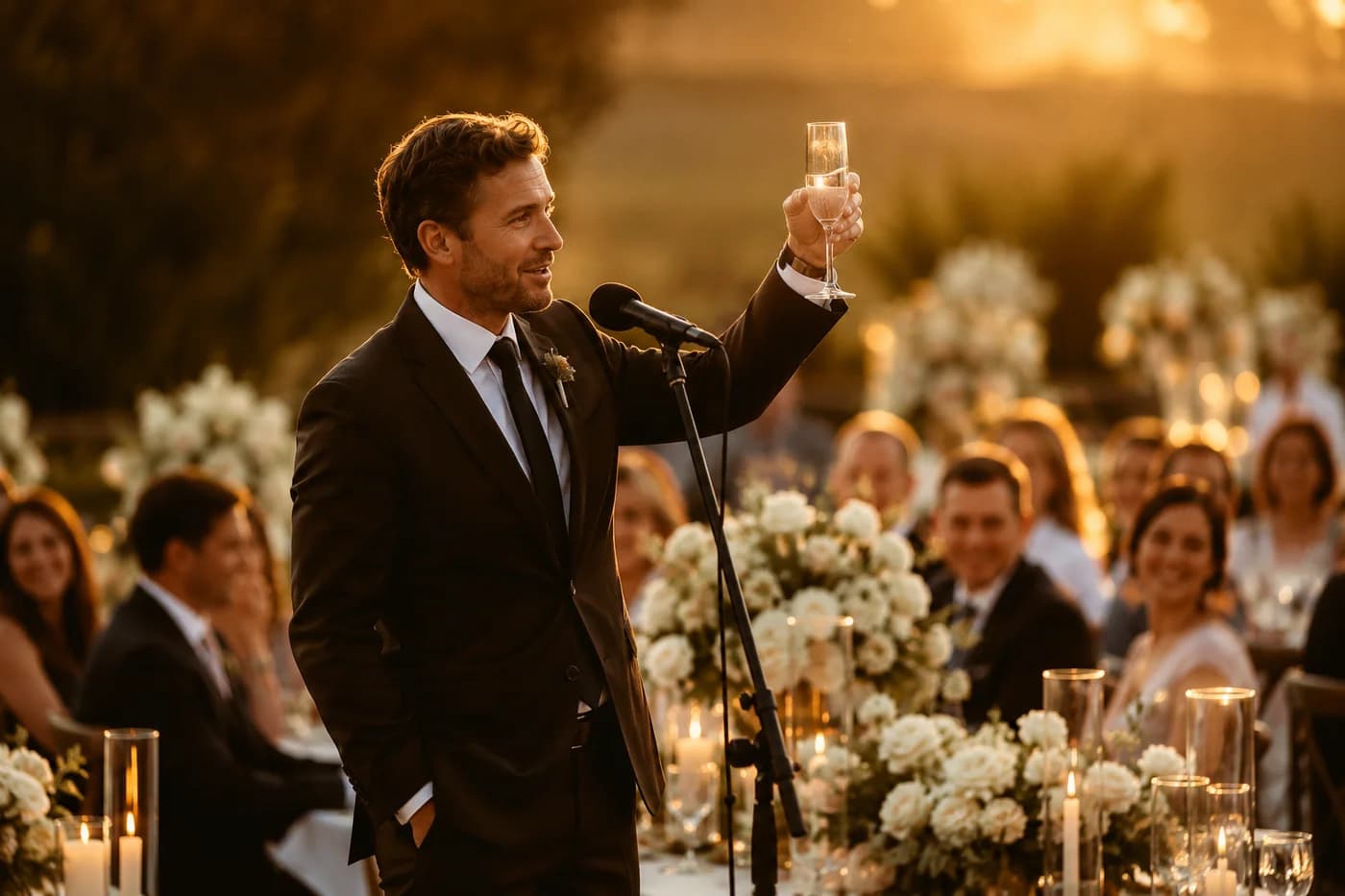
Toesprake by 'n Troue: Wie Praat, Wanneer, en Wat om te Verwag
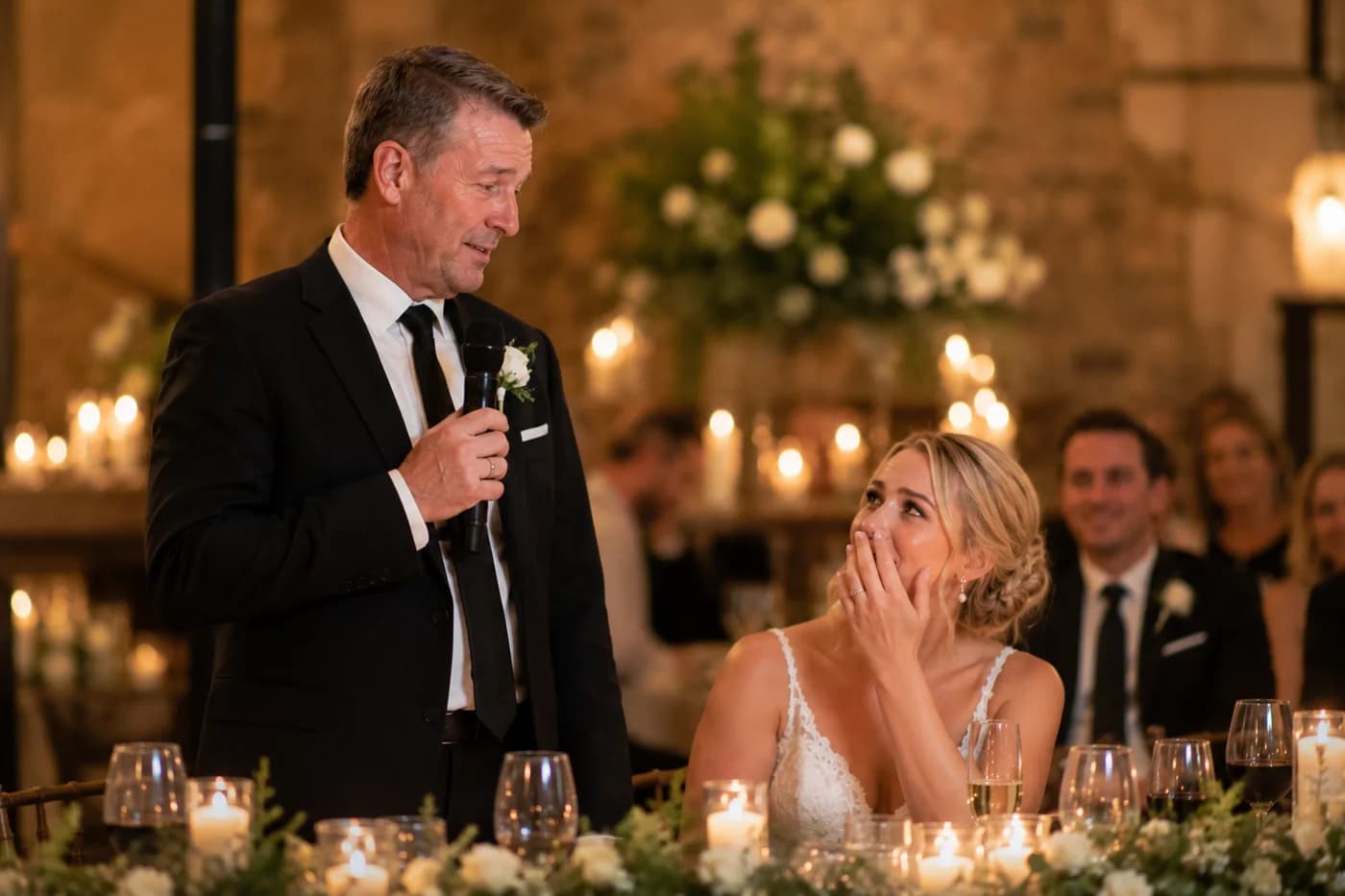
Vader van die Bruid Toespraak: Van die Hart tot die Mikrofoon
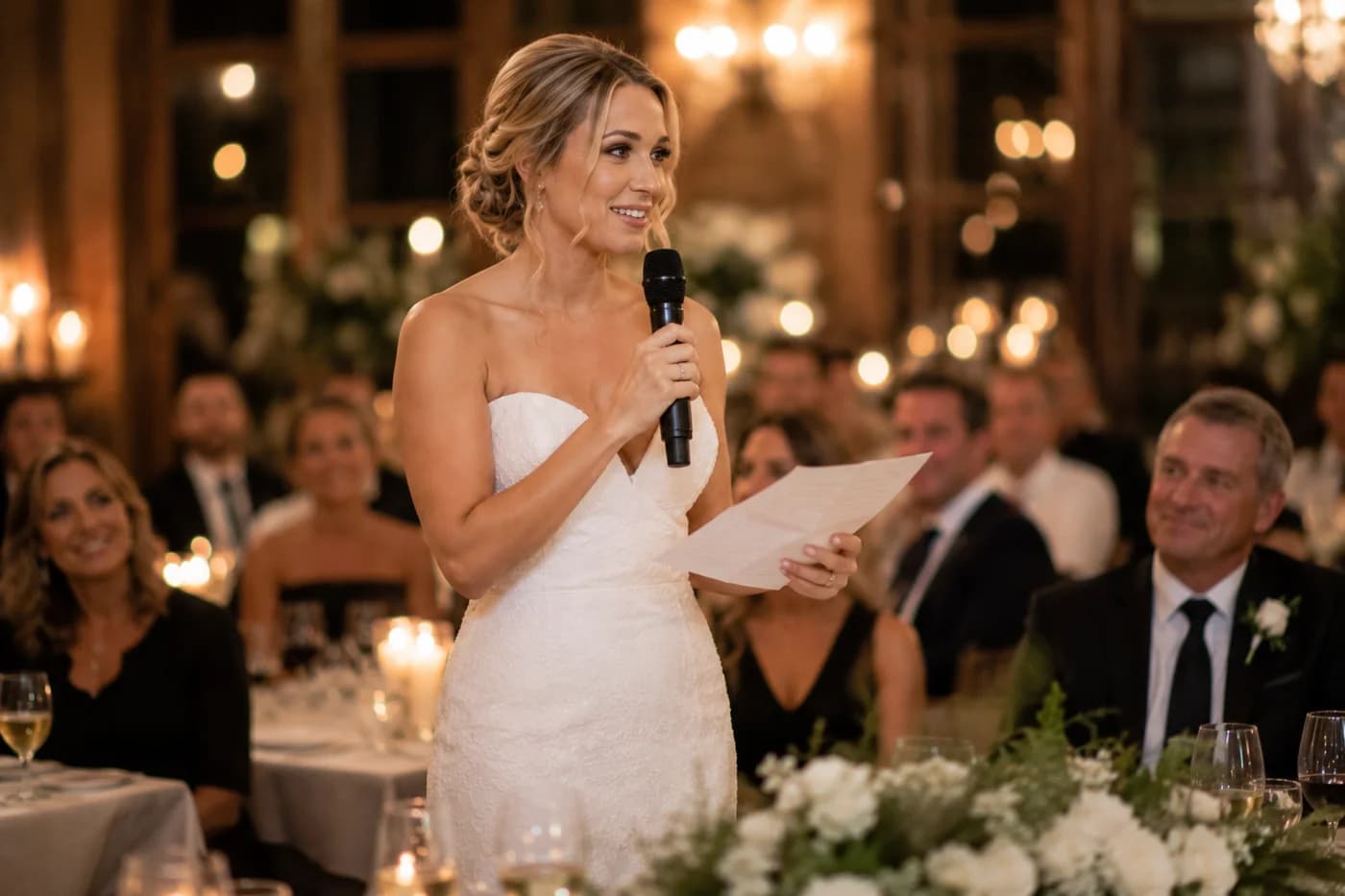
Jou Bruid Toespraak: Waarom Elke Bruid Dit Moet Oorweeg
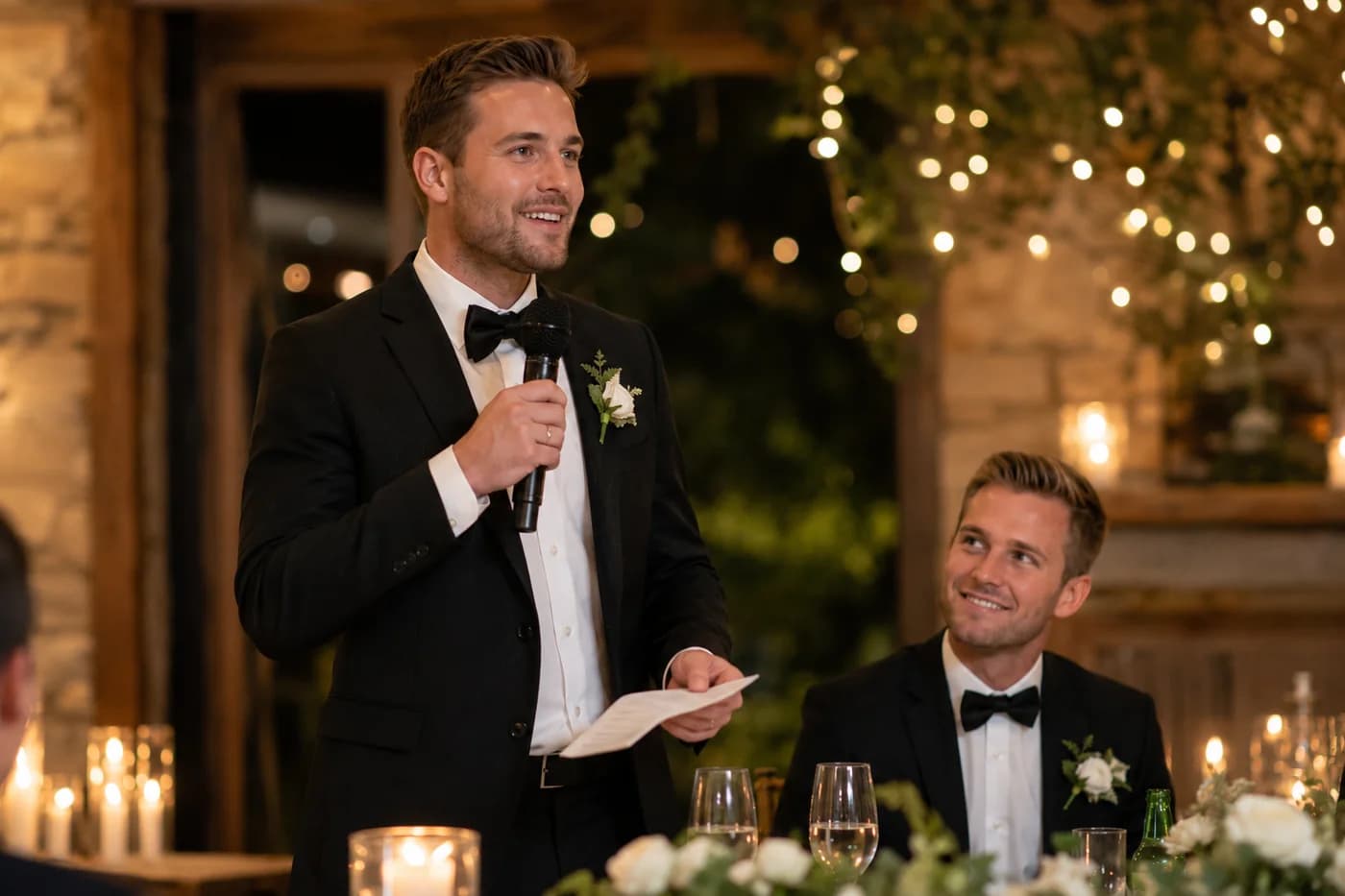
Beste Man Toespraak: Hoe om Dit Reg te Doen (Sonder om Sweet te Sweet)

Your Most-Asked Wedding Questions, Answered
